Stop Guessing Your Home Renovation Costs — Do This Instead
You got a quote last week. It was $40,000. You nearly choked. Your neighbor did the "same thing" for $22,000. So which number is real? And how would you even know?

You got a quote last week. It was $40,000. You nearly choked. Your neighbor did the "same thing" for $22,000. So which number is real? And how would you even know?
To estimate home renovation costs accurately: get three itemized contractor quotes, research your own material costs, add 15–20% contingency to the total, and audit every allowance in the contract. Most homeowners skip all four steps. That's why most renovation projects go over budget.
But the long answer changes how you think. This piece asks you 10 questions. Answer them honestly. By the end, you'll understand exactly why getting your renovation estimate right is the most important thing you do before a single hammer swings.
Think of the last time you guessed a price and got it wrong. A car repair. A medical bill. A grocery run.
Most people guess low. That's not stupidity — it's human nature. We want things to cost less, so we imagine they do.
Now multiply that instinct by $50,000. That's a kitchen renovation. One optimistic guess can wipe out your savings.
Say your estimate is $60,000. You're 30% through when the contractor finds $18,000 in unexpected costs you didn't plan for.
Where does it come from? Your emergency fund? A credit card? Do you stop the project mid-tile?
Unfinished renovations drop home value fast. A gutted bathroom with no floor is worth less than the one you started with. Going over budget doesn't just hurt — it costs you equity you may never recover.
Let's name the person most likely to skip cost estimation. They're confident. They've replaced a faucet. They've painted a room. They assume bigger projects scale up the same way small ones do.
They believe contractors pad quotes. They trust their gut over data. According to a 2023 Houzz renovation survey, nearly 73% of homeowners who exceeded their budget admitted they hadn't independently researched material costs before signing.
Sound familiar? The next questions are specifically for them.
A contractor hands you a quote for $85,000. Is that high? Low? About right?
Without your own baseline, you have zero leverage. You can't negotiate what you can't measure. You can't catch a padded line if you don't know what things actually cost.
Here's a concrete example. Cabinet installation runs $50–$150 per linear foot depending on material. A kitchen with 30 linear feet showing $12,000 for cabinets — now you have a specific question to ask.
These are 2024 national averages for major projects: Kitchen renovation: $100–$250 per square foot. Bathroom remodel: $70–$250 per square foot. Room addition: $80–$200 per square foot. Full basement finish: $30–$90 per square foot. Roof replacement: $4–$8 per square foot.
A 200-square-foot kitchen could cost $20,000 — or $50,000. The gap isn't random. Materials, finishes, and labor drive the difference.
Did you know your specific numbers before reading this? Most homeowners don't. That's the whole problem.
The National Association of Home Builders tracks this consistently. Most renovation projects exceed their original budget. The top reasons: hidden damage found after walls open (rotted framing, mold, outdated wiring), scope creep ('while we're in there' decisions that stack up fast), material price changes between quote and purchase, and allowances in contracts that don't reflect your actual selections.
That last one is where most homeowners lose thousands without realizing it.
A contractor quotes you $45,000 for a kitchen. Buried in the quote: '$3,000 tile allowance.'
You pick tile you love. It costs $8 per square foot instead of the $3 they assumed. On 400 square feet, that's $2,000 over allowance — instantly.
Allowances assume you'll pick the cheapest option. Want anything above builder-grade? Expect to blow past them. Every time. A real home renovation estimate uses your actual selections — not a contractor's wishful defaults.
A ballpark is a guess with a dollar sign in front of it. An estimate is a calculation.
Your neighbor's $22,000 bathroom remodel tells you almost nothing. Different contractor. Different city. Different finishes. Their number is not your number.
A real home renovation cost estimate itemizes every line: demolition costs, structural work, rough mechanicals (plumbing, electrical, HVAC), insulation and drywall, finishes (tile, paint, trim), fixtures and appliances, labor by trade, permits and inspections, contractor overhead and profit (typically 15–25%), and contingency (always 10–20% minimum). A ballpark skips most of this list. A real estimate covers every item.
Step 1: Get three itemized quotes. Not ballparks. Line-item quotes broken down by trade and material. Compare line by specific line.
Step 2: Research material costs yourself. Visit a tile showroom. Price appliances at the actual retailer. Know your selections before signing anything.
Step 3: Add a 15% contingency minimum. For older homes or gut renovations, use 20%. This isn't pessimism — it's math.
Step 4: Audit every allowance in the quote. Ask what happens when you exceed them. Get the answer in writing.
Step 5: Check permit costs in your city. Permits for a major addition run $1,500–$5,000 depending on location. Most homeowners never factor this in.
Step 6: Price labor separately. Call a local subcontractor. Ask what a licensed plumber charges per hour in your area. In 2024, that's $75–$150 depending on your market. If the quote doesn't match, you have a question.
A contractor's quote isn't a price tag. It's an opening position.
When you know countertop fabrication costs $40–$60 per square foot installed — and you see $80 in the quote — you have leverage. Ask why. Ask what a different stone would cost. Negotiate that specific line.
Homeowners who understand home renovation costs negotiate better. Not because contractors are dishonest — but because informed buyers make smarter decisions.
You can't control a project you can't measure. You can't catch a bad contractor quote without knowing what things actually cost. You can't make smart tradeoffs using a ballpark that hides half the bill.
Before your next contractor meeting: spend two hours pricing your top five materials yourself. Look up tile costs per square foot. Price the appliances at the actual store. Walk in knowing your numbers — not hoping they work out.
Two hours. Thousands saved. Do it.
Get three itemized contractor quotes, independently research your material costs, add a 15–20% contingency budget, and audit every allowance line in the contract. This four-step process takes 3–5 hours but can save thousands in unexpected overruns.
The top causes are hidden damage discovered after demolition, scope creep from 'while we're in there' decisions, material price changes, and contractor allowances that don't match your actual selections. Nearly 73% of homeowners who exceeded their budget hadn't researched costs independently.
Add at least 15% for standard renovations and 20% for older homes or gut remodels. This covers hidden damage, price changes, and scope adjustments. A contingency isn't a cushion — it's a realistic acknowledgment of how renovations actually unfold.
Continue exploring home improvement topics and cost-saving strategies.
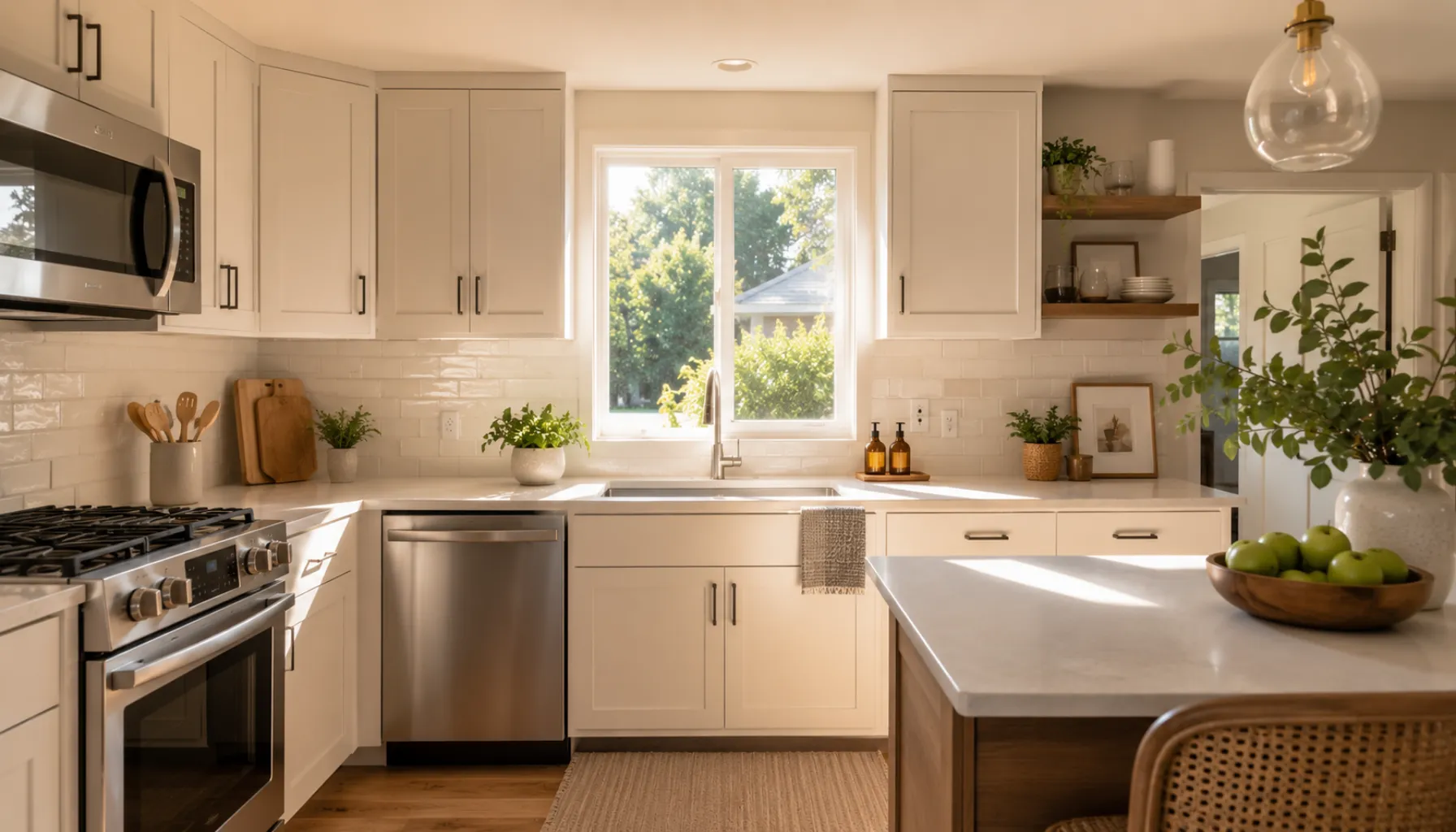 Kitchen
 Discover practical strategies to cut kitchen renovation costs without sacrificing quality — from keeping your layout to choosing smart material alternatives.
Read article →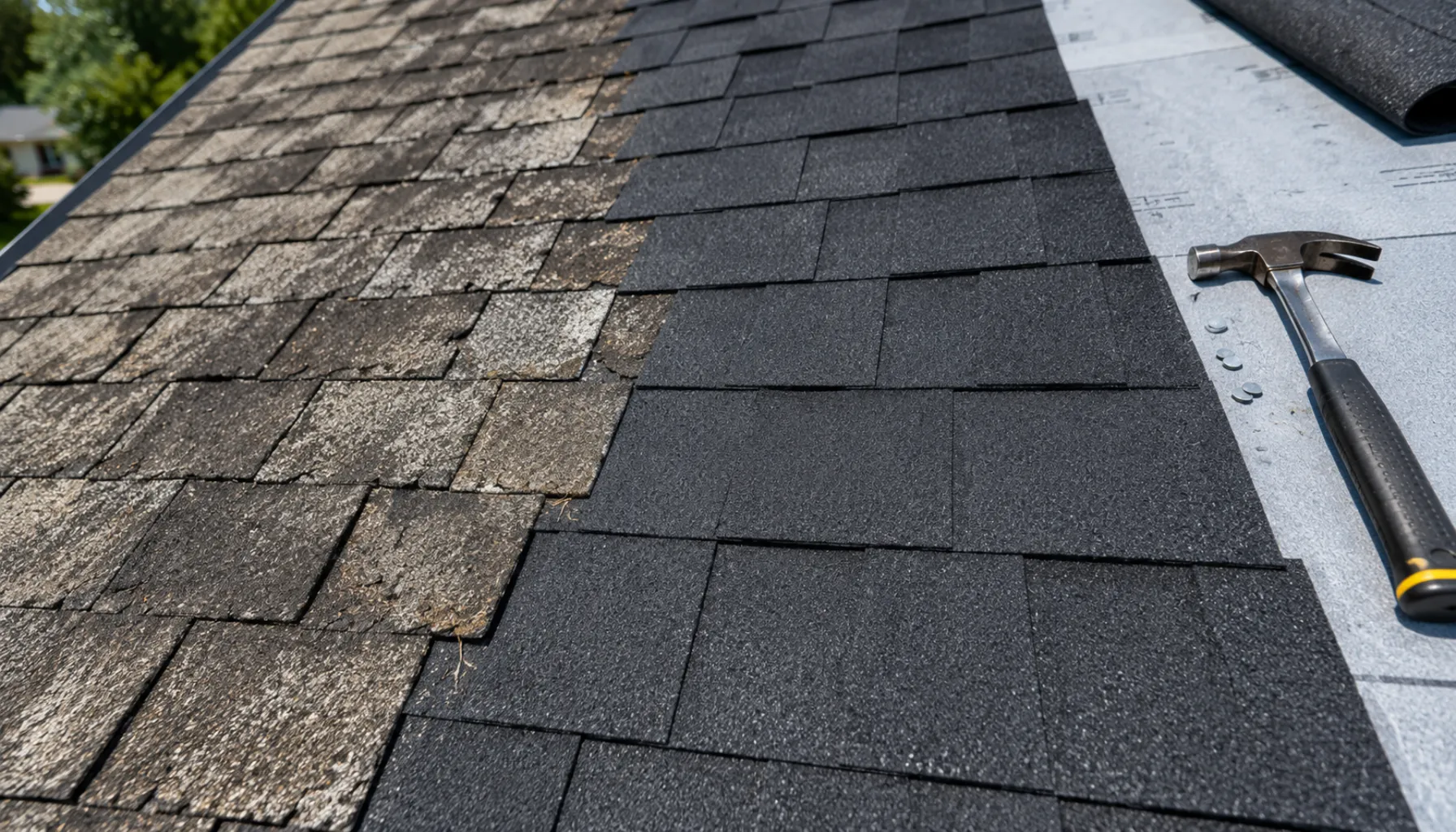 Roofing
 Not every roof problem requires a full replacement. Learn when a repair makes sense and when it's time to invest in a complete new roof.
Read article →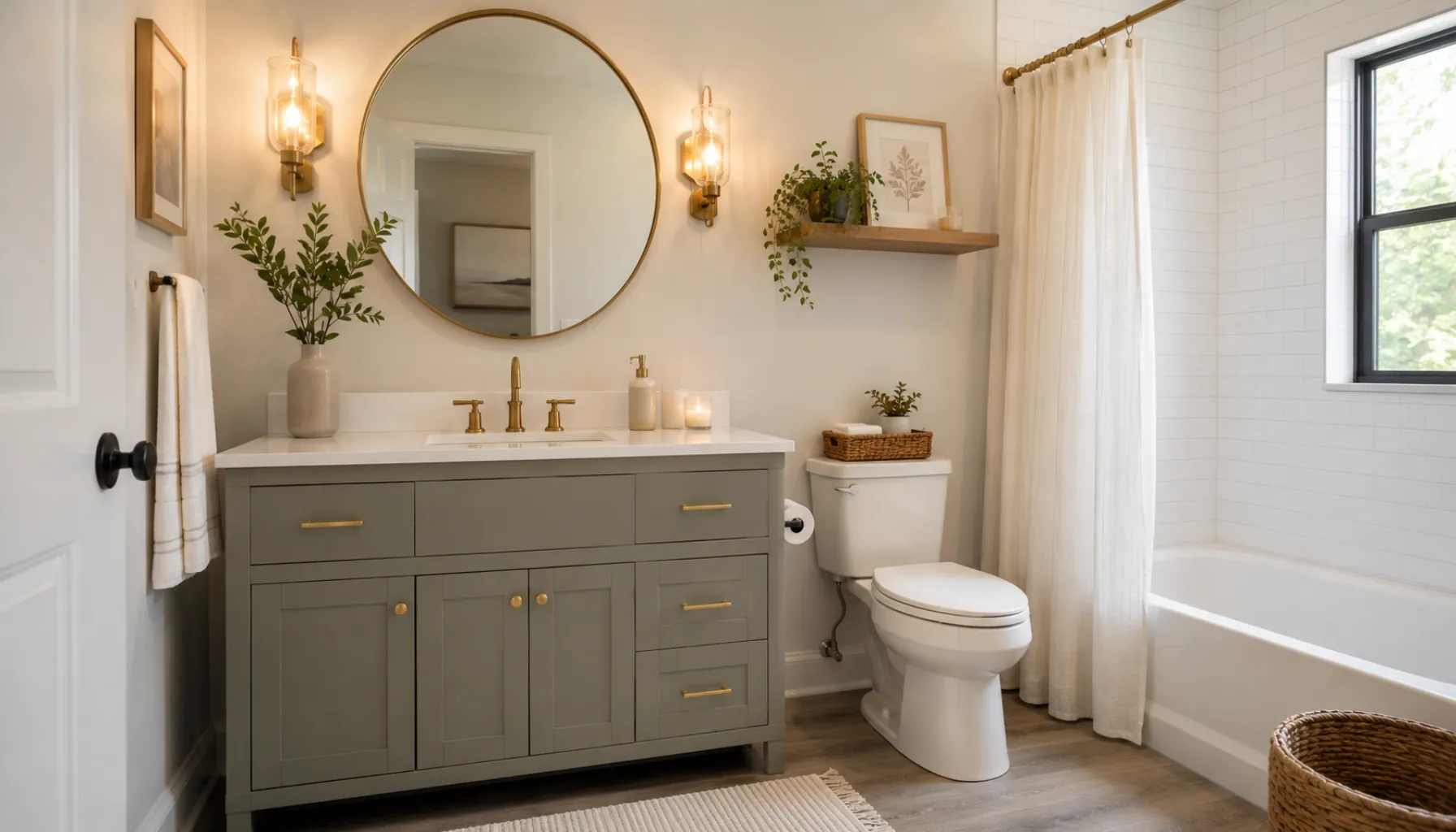 Bathroom
 You don't need a huge budget to transform your bathroom. These practical ideas deliver big impact without breaking the bank.
Read article →