Roof Repair vs. Full Replacement: Which Is Right for You?
Not every roof problem requires a full replacement. Learn when a repair makes sense and when it's time to invest in a complete new roof.
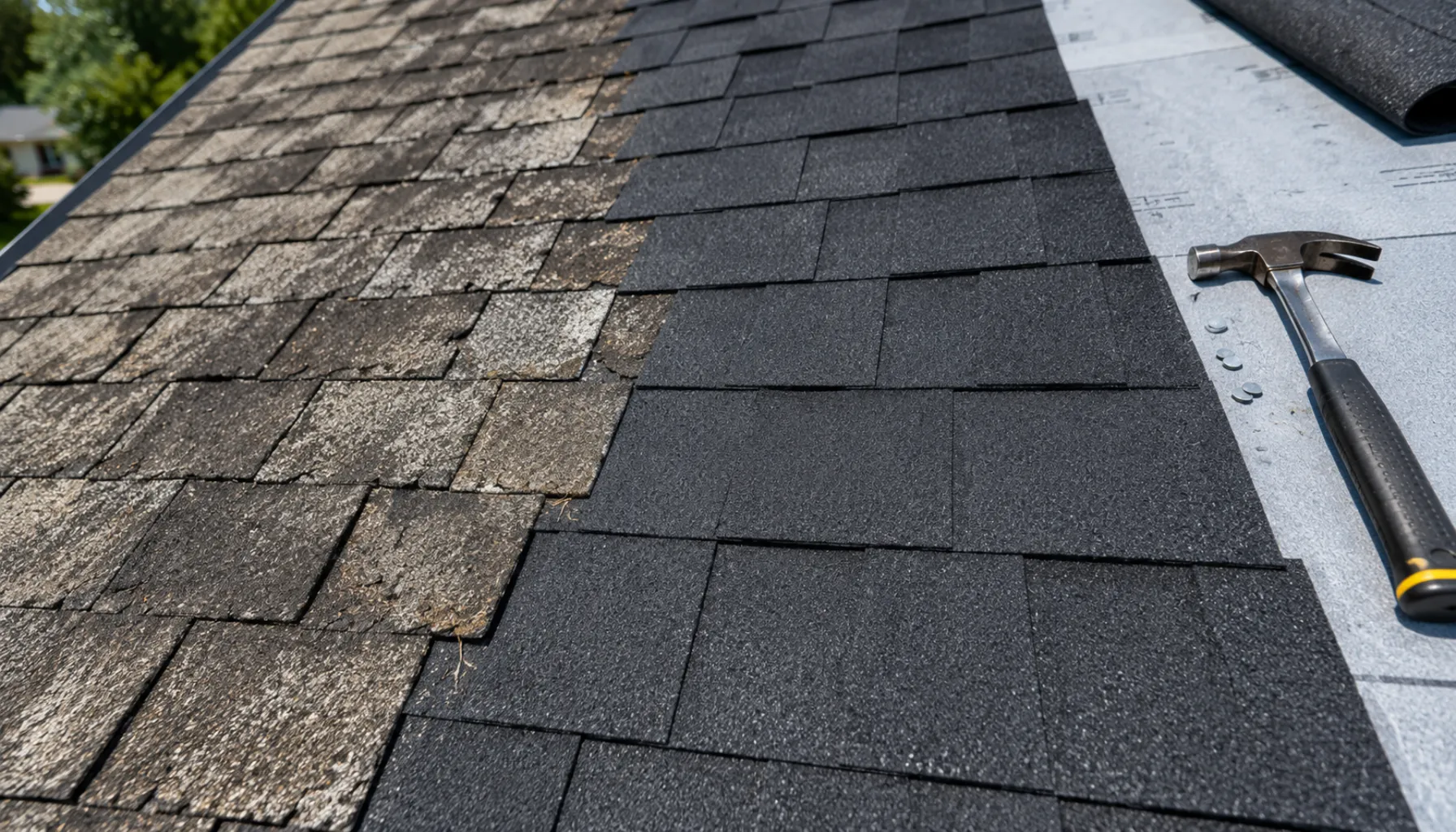
Not every roof problem requires a full replacement. Learn when a repair makes sense and when it's time to invest in a complete new roof.
When you notice a roof leak, missing shingles, or storm damage, the first question most homeowners ask is: should I repair or replace? The answer depends on your roof's age, the extent of damage, and your long-term plans for the home.
A targeted repair can cost $300 to $1,500 for minor issues, while a full replacement typically ranges from $9,000 to $24,000 or more. The right choice can save you thousands — or prevent costly recurring problems.
Repair is usually the best option when damage is isolated to a small area — such as a handful of missing or damaged shingles, a single leak point, or minor flashing failure.
If your roof is less than 15 years old and the overall system is in good condition, targeted repairs can extend its useful life for years without the cost of a full tear-off and replacement.
Minor repairs are also practical when you're planning to sell soon and just need the roof to pass inspection, though buyers may request credits for older roofs regardless.
If your roof is approaching or past its expected lifespan (20–30 years for asphalt shingles), replacement becomes more cost-effective than repeated repairs.
Widespread damage across multiple areas, sagging decking, persistent leaks in different spots, or visible daylight through the roof boards are strong indicators that replacement is necessary.
Insurance claims for storm damage may cover a significant portion of replacement cost, making it financially advantageous to replace rather than patch.
Continuing to repair an aging roof can lead to escalating costs. Each repair addresses a symptom but doesn't fix the underlying deterioration of materials and waterproofing layers.
Water damage from a failing roof can affect insulation, framing, drywall, electrical systems, and even create mold issues — all of which are far more expensive to remediate than the roof itself.
Energy efficiency also suffers with an aging roof. Poor insulation and ventilation from deteriorating materials can increase heating and cooling costs by 10–25%.
Schedule a professional roof inspection, which typically costs $150–$400. A qualified inspector can assess the remaining useful life and identify issues not visible from the ground.
Look for key warning signs: curling or buckling shingles, granule loss (check your gutters), moss or algae growth, damaged flashing around chimneys and vents, and sagging areas.
Request documentation of the inspection findings. This gives you objective information to compare against contractor repair or replacement proposals.
A common rule of thumb: if repair costs exceed 30–40% of a full replacement, it often makes more sense to replace. This is especially true for roofs past the halfway point of their expected lifespan.
Consider the full picture: a new roof adds value to your home (typically 60–70% return on investment), improves energy efficiency, and eliminates the uncertainty of ongoing repair needs.
Get itemized quotes for both repair and replacement from at least two contractors. This allows you to compare the real cost difference and make an informed decision.
Key signs include: the roof is 20+ years old, shingles are curling or missing in multiple areas, you have recurring leaks, there's visible sagging, or you see significant granule loss in gutters.
It depends on the extent of damage. Minor isolated repairs can buy time, but if problems are widespread, replacement is usually more cost-effective for a roof near the end of its lifespan.
Insurance typically covers roof damage from sudden events (storms, hail, fallen trees) but not wear and tear or maintenance issues. Coverage varies by policy and carrier.
Continue exploring home improvement topics and cost-saving strategies.
 Kitchen
 Discover practical strategies to cut kitchen renovation costs without sacrificing quality — from keeping your layout to choosing smart material alternatives.
Read article → Bathroom
 You don't need a huge budget to transform your bathroom. These practical ideas deliver big impact without breaking the bank.
Read article → HVAC
HVAC Timing your HVAC replacement strategically can save you money on both equipment and installation. Here's when to schedule for the best deals.
Read article →