$ Home Project Cost Guide
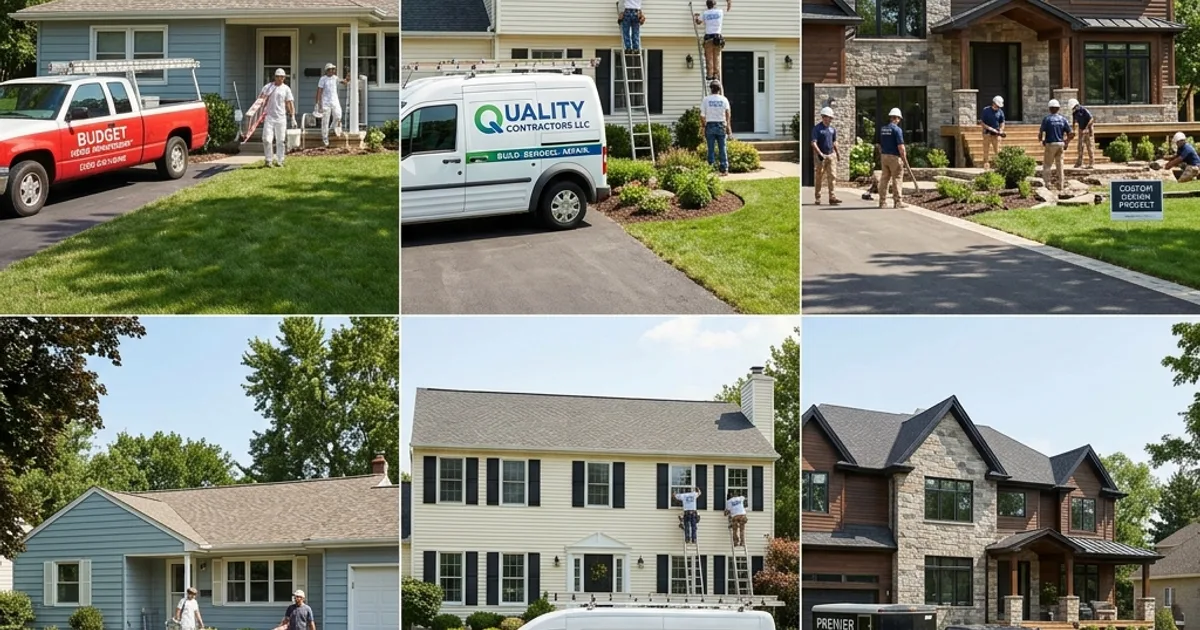
Multiple contractor crews working on different American suburban homes showing price variation
Homeowner Guide

Why contractor quotes vary so much

Getting three quotes for the same project and seeing prices differ by 30% or more is completely normal. This guide explains the 8 main factors that cause these differences — and how to use that knowledge when comparing bids.

Last updated: May 2026

8 reasons contractor quotes differ

Each factor below can independently shift a quote by 10–30%. Combined, they explain why two contractors can look at the same project and arrive at very different numbers.

👷
Factor 1

Labor demand and availability

High impact

Contractor rates depend heavily on local labor supply, seasonal demand, and crew scheduling. When demand is high — such as after storms or during peak renovation season — labor rates can increase 15–30%.

Example: A roofer in South Florida after hurricane season may charge 25% more than the same scope in a slower market.
🪵
Factor 2

Material grade and brand

High impact

The difference between budget and premium materials can change a project's cost by 40–80%. Contractors may also have supplier relationships that affect pricing.

Example: Basic asphalt shingles vs. architectural shingles can add $1,500–$4,000+ to a roof replacement.
🏠
Factor 3

Home age and condition

Medium–High impact

Older homes often require additional prep work, code upgrades, or structural repairs that newer homes do not. These items are frequently discovered after work begins.

Example: A bathroom remodel in a 1960s home may require plumbing and electrical upgrades that a 2010 home would not.
📋
Factor 4

Permits and code compliance

Medium impact

Permit requirements, inspection fees, and code compliance costs vary significantly by jurisdiction. Some contractors include permits; others list them as extras.

Example: Building permit fees for the same HVAC replacement can range from $75 in one county to $500+ in another.
🔧
Factor 5

Project scope and complexity

High impact

How each contractor defines the scope of work is the single biggest reason quotes differ. Some include removal, prep, and cleanup; others quote only the installation.

Example: One flooring quote may include subfloor repair and furniture moving; another may exclude both entirely.
📍
Factor 6

Site access and conditions

Medium impact

Difficult access — steep roofs, tight spaces, upper floors, or landscaping obstacles — adds labor time and equipment costs that vary between contractors.

Example: A third-floor bathroom remodel requiring material hoisting may cost $1,000–$2,000 more than ground-level work.
🛡️
Factor 7

Warranty and insurance

Medium impact

Contractors with better warranties, higher insurance coverage, and longer track records typically charge more — but also carry lower risk for homeowners.

Example: A contractor offering a 10-year labor warranty may quote 10–15% higher than one offering only a 1-year warranty.
💼
Factor 8

Overhead and business costs

Medium impact

Contractor overhead includes office costs, vehicle maintenance, workers' comp insurance, marketing, and administrative staff. Sole operators often quote lower than established companies.

Example: A one-person crew may quote $8,000 for painting; a full-service company with insurance and project management may quote $11,000.
How much each factor can change a quote

This chart shows the typical cost impact range for each factor based on common home improvement projects.

Project scope
Material grade
Labor demand
Home condition
Overhead & insurance
Warranty terms
Permits & codes
Site access

Ranges are approximate and vary by project type and location. Source: Home Project Cost Guide Methodology.

What to do about price differences

✓ Do this

  • Get at least 3 detailed written quotes
  • Compare scope line by line, not just totals
  • Ask about exclusions and assumptions
  • Verify license, insurance, and warranty
  • Use a comparison template to organize bids
  • Ask how change orders and hidden damage are handled

✗ Avoid this

  • Choosing the lowest quote without comparing scope
  • Signing without a written contract
  • Paying more than 30% upfront
  • Ignoring warranty differences between bids
  • Skipping permit verification
  • Rushing the decision under sales pressure

Share this guide

Contractors, real estate agents, home inspectors, and educators are welcome to link to or embed this guide. Use branded attribution only — no keyword-rich anchor text.

Embed code: <a href="https://ushomecostguide.com/why-contractor-quotes-vary/">Why Contractor Quotes Vary</a> — Source: US Home Cost Guide
Citation format:

"Why Contractor Quotes Vary." Home Project Cost Guide, May 2026.

Frequently asked questions

Is it normal for contractor quotes to vary by 30% or more?

Yes, variations of 20–50% between quotes are common for most home improvement projects. This is usually due to differences in scope, material grade, warranty terms, and how each contractor prices their labor and overhead.

Why is one contractor quote so much lower than the others?

A significantly lower quote often means the contractor has excluded items that others include — such as removal, permits, prep work, or cleanup. It can also indicate lower-quality materials, no warranty, or insufficient insurance coverage. Always compare the full scope of work before choosing by price alone.

Should I negotiate contractor quotes?

You can ask contractors to explain their pricing and discuss scope adjustments, but aggressive price negotiation can lead to corners being cut. Instead, focus on understanding what each quote includes and excludes, then make your decision based on value, not just cost.

How can I compare quotes fairly?

Use a standardized comparison template that lists the same line items for each contractor — labor, materials, permits, removal, warranty, timeline, and exclusions. Our free Contractor Quote Comparison Template can help you do this.

Does getting more quotes always get you a better price?

Getting 3 quotes is generally enough to establish a realistic price range. Beyond that, additional quotes may not change the range significantly — but they can help you find a contractor whose communication style and approach fit your preferences.

HP
Home Project Cost Guide Editorial Team Research & Cost Analysis

Our editorial team researches and compiles home improvement cost data from contractor pricing surveys, manufacturer specifications, permit databases, and regional labor rate benchmarks to create practical planning estimates for U.S. homeowners.

✓ Published 200+ cost guides and calculators✓ Covers 25 U.S. states with localized pricing✓ Data sourced from contractor and industry benchmarks
Last reviewed: May 2026