The first question every homeowner asks before pulling the trigger on a new roof is the same: *what should this actually cost for my house?* And the most honest answer in 2026 is that it depends heavily on home size — but not in the linear way most people assume. A 2,000 sq ft home doesn't cost exactly twice as much to roof as a 1,000 sq ft home. There are fixed setup costs, minimum crew sizes, and material waste factors that change the math at every size tier.
Home Size vs Roof Size
Before we get into numbers, an important distinction. When people say "2,000 sq ft home," they usually mean the **interior square footage**. The actual roof surface is almost always larger — typically 1.3 to 1.7 times bigger — because of pitch, overhangs, and complexity.
A 2,000 sq ft single-story ranch might have 2,400 sq ft of roof. A 2,000 sq ft two-story might have only 1,400 sq ft of roof (smaller footprint, but two floors stacked). This is why two homes with identical interior square footage can have very different roofing costs. The numbers below assume typical single-story or 1.5-story American home configurations.
This size is where the **fixed costs hurt the most**. Permits, dumpster rental, crew setup, and minimum material orders are roughly the same whether you're roofing 1,000 or 2,000 sq ft. As a result, smaller homes have a higher cost-per-square-foot than larger ones. Expect to pay around $6.50–$9.50 per sq ft installed for asphalt at this size.
Common at this size: small ranch homes, bungalows, cottages, and many homes in the Midwest and rural South.
This is the size where the math starts working in your favor. The per-square-foot cost typically drops to **$5.50–$8.50** for asphalt because fixed costs are spread across more area. This is also the most common size range for older American suburban homes built between 1950 and 1985.
A 1,500 sq ft home in a moderate-cost market (think Indianapolis, Charlotte, Phoenix outskirts) typically lands right around **$10,500–$11,500** for a quality architectural shingle replacement in 2026.
The 2,000 sq ft home is the American median, and it's also where you'll see the widest spread in quotes — anywhere from $9,500 to $22,000 for asphalt. The biggest variables at this size are roof complexity (multiple peaks, valleys, dormers) and regional labor costs.
A homeowner in Dallas might pay $12,500. The same home in Boston might pay $19,500. The materials are identical. The difference is labor, permitting, and disposal costs.
At 2,500 sq ft, you're typically looking at a two-story home, which can mean either a smaller roof footprint (cheaper) or a larger more complex roof with multiple sections (more expensive). The cost per sq ft of *interior* space starts to drop here, often to **$5.50–$8.00** for asphalt — but only if the roof itself is relatively simple.
Watch out for roofs with multiple gables, dormers, or steep pitches. These can push a 2,500 sq ft home's roofing cost above what a 3,000 sq ft simple roof would cost.
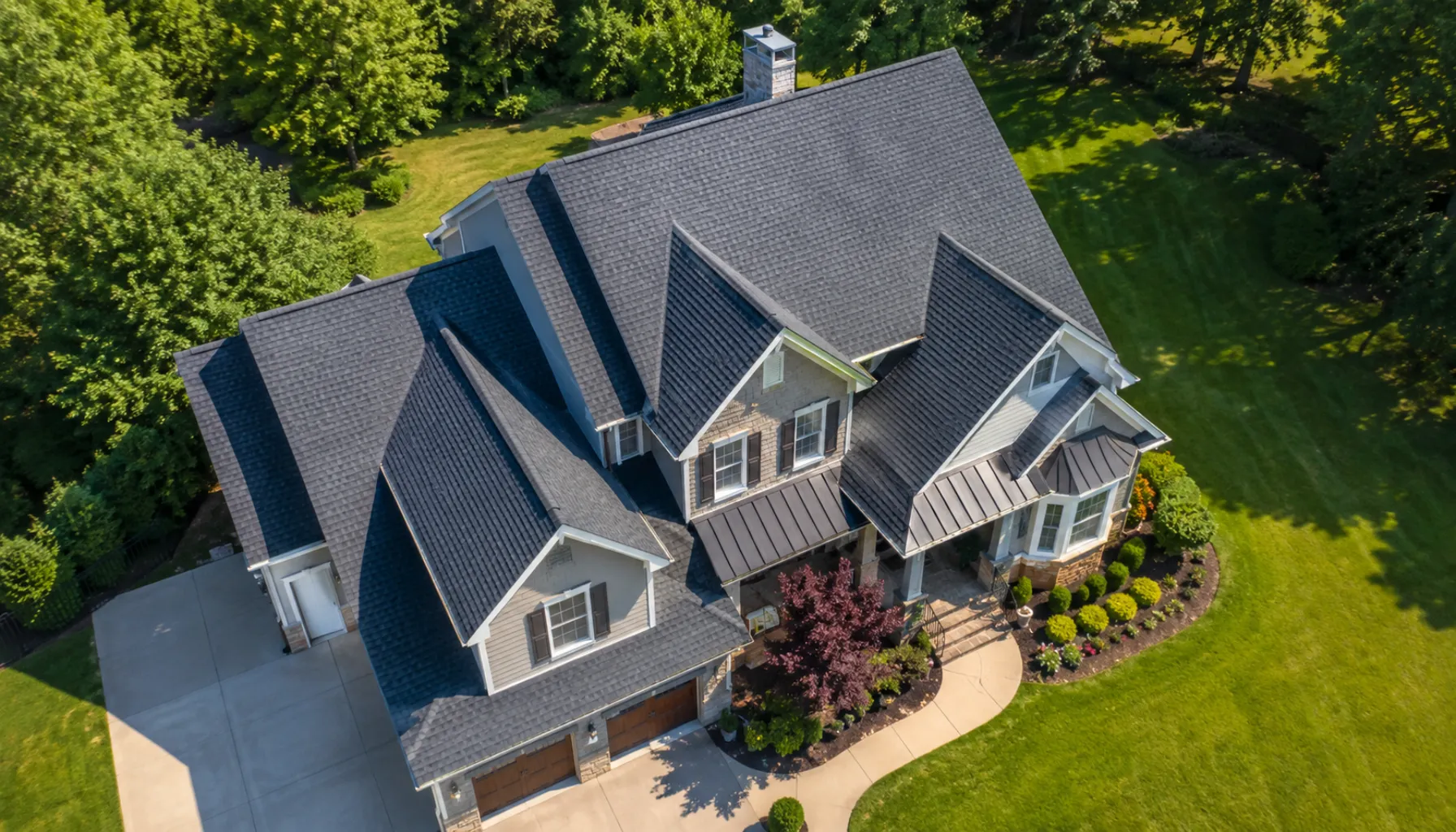
At this size, you're usually in larger suburban homes, executive homes, or older homes with sprawling additions. The per-sq-ft cost continues to drop slightly with scale, but **complexity becomes the dominant factor**. A simple gable roof on a 3,000 sq ft home might come in cheaper than a complicated roof on a 2,500 sq ft home.
Many homes at this size have premium features like skylights, chimneys, and turret sections — each of which adds $300–$1,500 to the total. Skylight replacement during a re-roof typically runs $800–$2,000 per unit.
The Five Variables That Move These Numbers
The ranges above are wide for a reason. Here are the factors that determine whether you land at the low end or the high end:
**Roof pitch.** A steep roof (over 8/12 pitch) costs 25–50% more than a low-slope roof because workers need safety equipment, additional time, and slower movement. Walking a 12/12 pitch is genuinely dangerous — and contractors price accordingly.
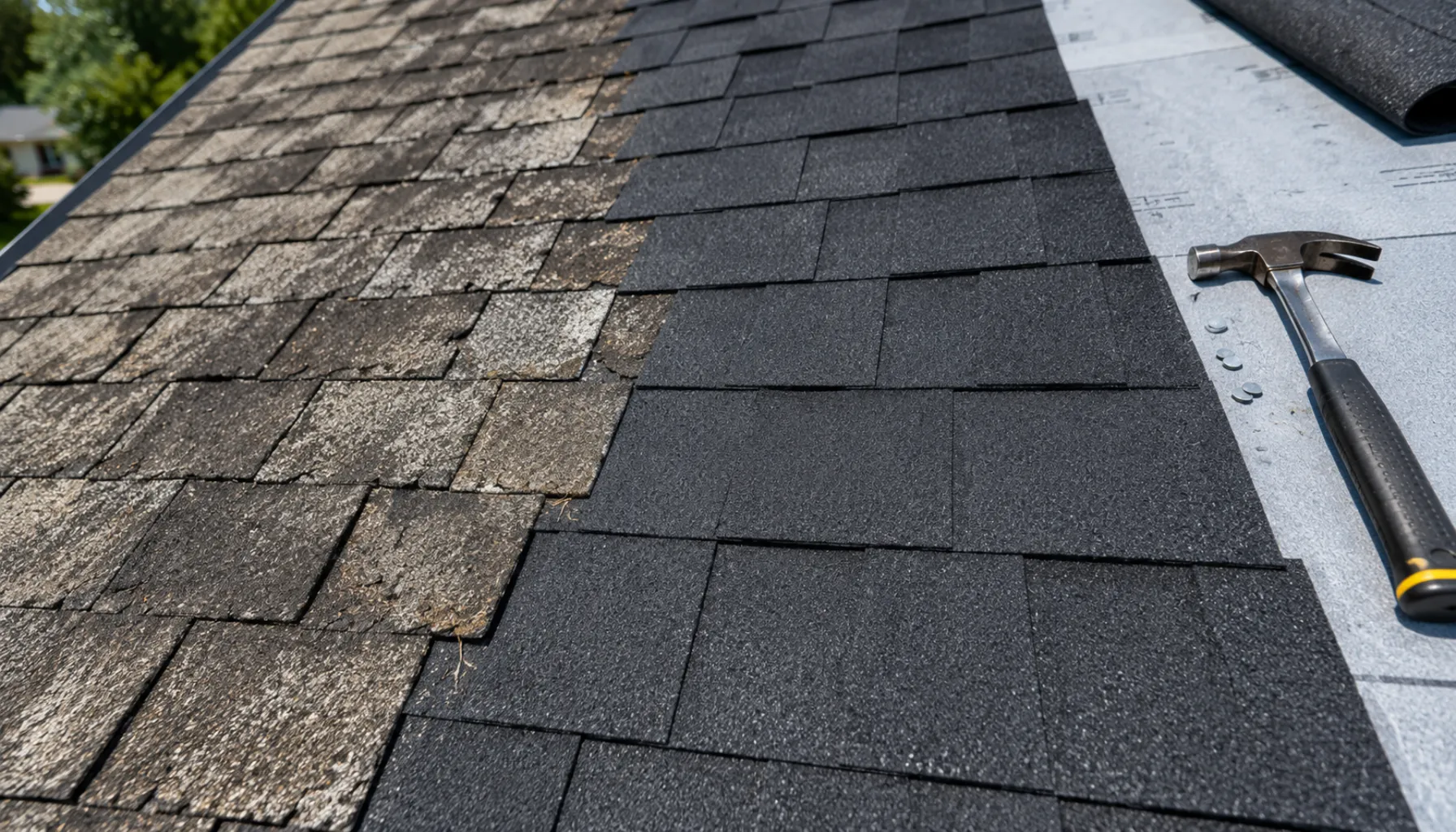
**Number of layers being removed.** If your current roof has two or three layers of old shingles stacked, expect to pay an extra $800–$2,000 for the additional tear-off and disposal. Many homes in the Northeast and Midwest have two layers because the previous owner saved money by roofing over the old layer.
**Deck condition.** Once the old shingles come off, your roof deck (the plywood underneath) is exposed. If sections are rotted, they need replacement at roughly $70–$120 per sheet of plywood installed. A typical home needs 2–6 sheets replaced. Severe cases can need 15+, adding $1,500+ to the project.
**Regional labor rates.** California, the Northeast, and the Pacific Northwest are 30–60% more expensive than the South and Midwest for identical roofing work. This is the single biggest geographic variable.
**Material tier.** Within asphalt alone, you can choose between 25-year shingles (cheapest), 30-year architectural (most common), or 50-year premium designer shingles (top tier). The premium tier typically adds $1,500–$3,500 to total cost on an average home.
How to Get an Accurate Quote for Your Size
The ranges above are accurate, but your specific situation matters more than any chart. Three steps get you to a real number quickly:
Use a calculator like our Roof Replacement Cost tool to plug in your actual square footage, pitch, and zip code for a customized estimate.
Then get three local quotes — and have at least one of them come from an independent contractor rather than a national chain.
Finally, compare the quotes to the ranges above. If all three quotes are above the high end of the range without an obvious reason (extreme pitch, multiple layers, premium materials), something is being padded.
A roof is a generational expense for most American homes. Spend the extra hour upfront making sure you're paying for the roof, not for someone's overhead.
Multiply the ground footprint of the home by the pitch multiplier (typically 1.15 to 1.45) and add 10% for waste and overhangs.
Is a two-story home roof cheaper to replace than a one-story?
Yes. For the same total interior square footage (e.g., 2,000 sq ft), a two-story home has a smaller roof footprint (roughly 1,000 sq ft) than a single-story ranch (roughly 2,000 sq ft).
Our editorial team researches and compiles home improvement cost data from contractor pricing surveys, manufacturer specifications, permit databases, and regional labor rate benchmarks to create practical planning estimates for U.S. homeowners.
✓ Published 200+ cost guides and calculators✓ Covers 25 U.S. states with localized pricing✓ Data sourced from contractor and industry benchmarks
Last reviewed: 2026-06-13
Related articles
Continue exploring home improvement topics and cost-saving strategies.
Kitchen
How to Save Money on Your Kitchen Remodel in 2026
Discover practical strategies to cut kitchen renovation costs without sacrificing quality — from keeping your layout to choosing smart material alternatives.