When something breaks in your home, the decision feels binary: fix it or buy new. But the financially smart answer depends on three specific factors that most homeowners never evaluate together — and getting this wrong can cost thousands.
The three factors that determine the right choice
Every repair-vs-replace decision comes down to three variables: the item's remaining useful life, the repair-to-replacement cost ratio, and the efficiency gap between old and new.
Most homeowners evaluate only one of these — usually the upfront cost. But ignoring the other two leads to decisions that feel smart today but cost more over the next 5–10 years.
Factor 1: Remaining useful life
Every major home system has an expected lifespan. Asphalt shingle roofs: 20–30 years. HVAC systems: 15–20 years. Water heaters: 10–15 years. Windows: 20–30 years. Knowing where your system falls in its lifecycle is the first input.
If a system is in the first half of its expected life and the damage is isolated, repair is almost always the right call. If it's in the last 25% of its lifespan, replacement should be seriously considered regardless of repair cost.
The worst financial outcome is paying for a major repair on a system that fails completely within 2–3 years. You've spent money on the repair and still need the full replacement.
Factor 2: The cost ratio rule
The industry standard guideline: if a single repair costs more than 50% of full replacement cost, replacement is usually the better investment.
But this rule needs context. A $600 repair on a $1,500 water heater (40% ratio) might still make sense if the unit is only 5 years old. The same ratio on a 12-year-old unit is a poor investment.
Also consider cumulative repair costs. If you've already spent $1,500 repairing a system over the past 2 years and now face another $800 repair, you've effectively reached replacement cost through incremental repairs — without getting a new system.
Factor 3: The efficiency gap
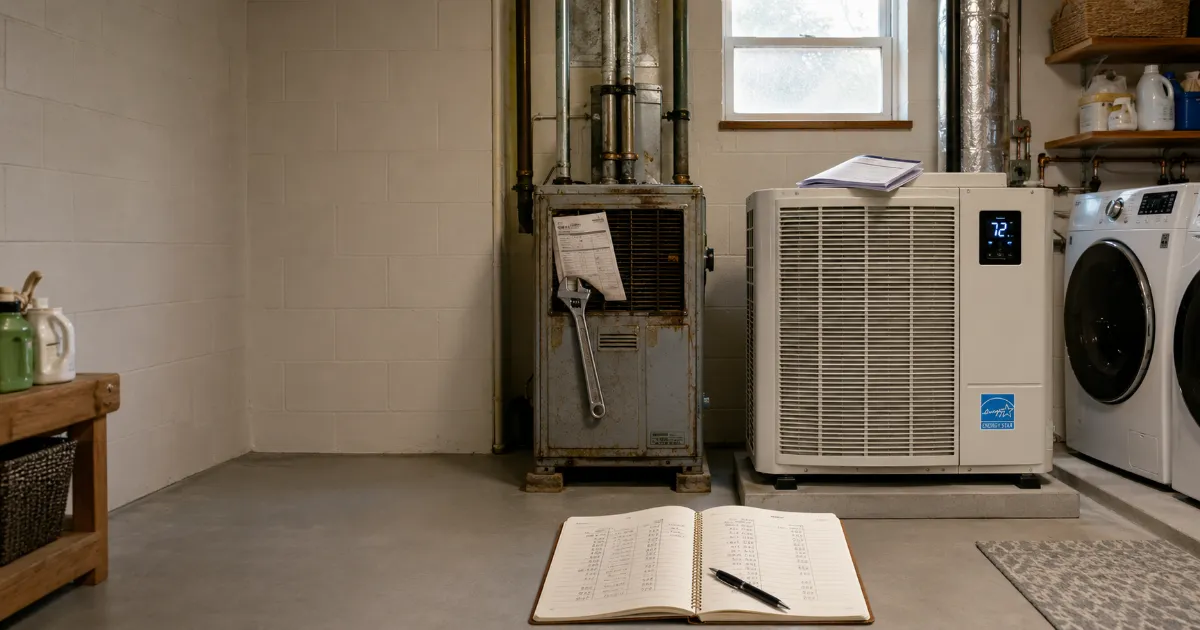
Older systems — especially HVAC, windows, and insulation — often operate far below current efficiency standards. A 15-year-old air conditioner might have a 10 SEER rating, while a new baseline model starts at 15 SEER.
That efficiency gap translates to real dollars. A homeowner spending $200/month on cooling with a 10-SEER system might spend $130/month with a 15-SEER unit — saving $840 per year.
When calculating the true cost of 'repair and keep,' include the ongoing efficiency penalty. A system that costs $500 to repair but wastes $800/year in excess energy isn't actually saving you money.
Category-by-category breakdown for 2026
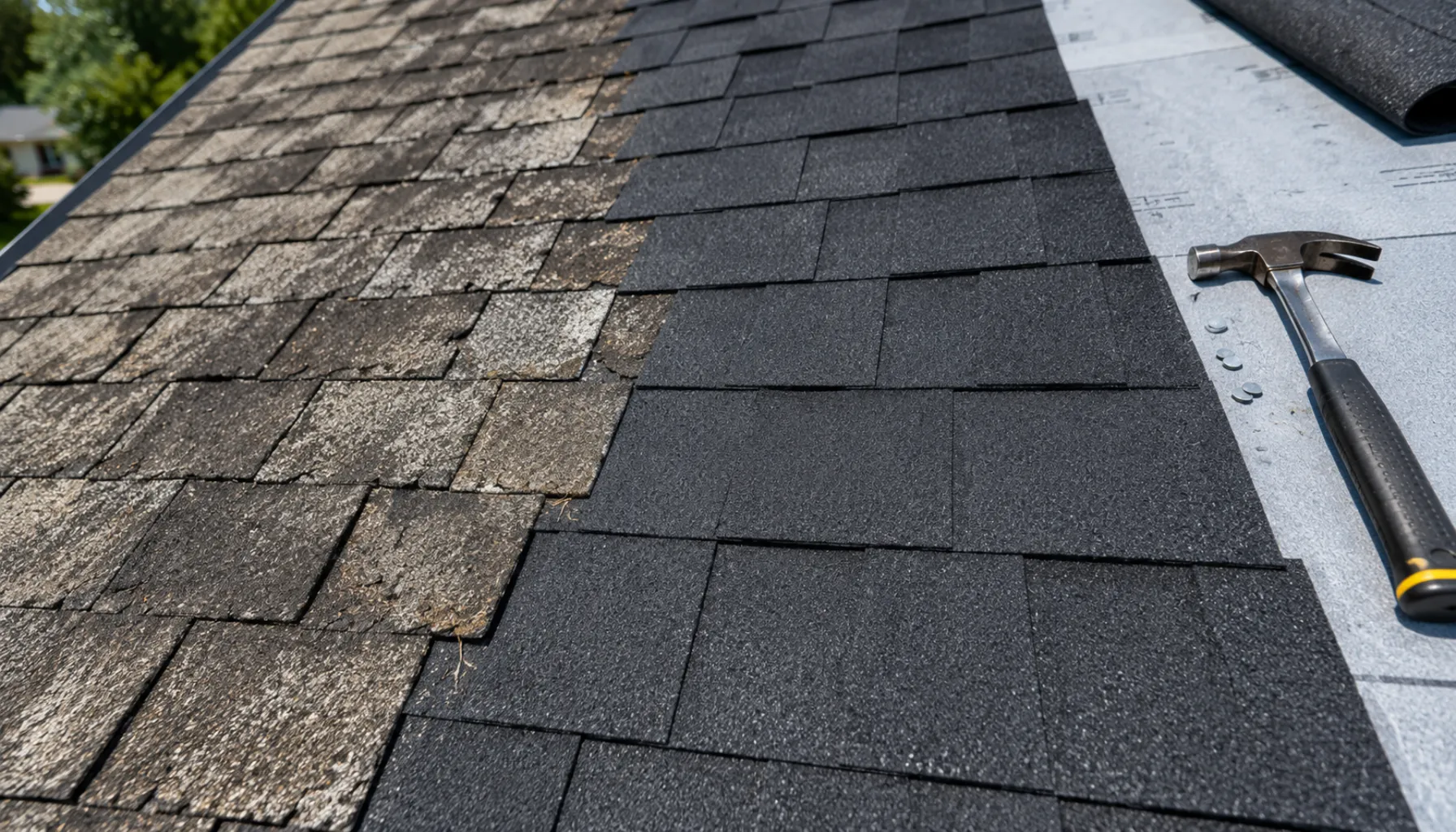
Roofing: Repair if damage covers less than 25% of the roof area and the roof is under 15 years old. Replace if widespread damage, multiple prior repairs, or age exceeds 20 years.
HVAC: Repair if the system is under 10 years old and the issue is a single component failure (capacitor, contactor, fan motor). Replace if the compressor fails on a system over 12 years old, or if the system uses R-22 refrigerant.
Water heater: Repair if the issue is a thermostat, element, or valve on a unit under 8 years old. Replace if the tank is leaking, the unit is over 10 years old, or you've had multiple repairs in 2 years.
Windows: Repair if the issue is hardware, weatherstripping, or a single broken pane. Replace if frames are rotting, seals have failed on multiple windows, or the windows are single-pane in a heating-dominant climate.
The decision framework
Step 1: Determine the item's age as a percentage of expected lifespan. Step 2: Get a repair quote and calculate the repair-to-replacement cost ratio. Step 3: Estimate the annual efficiency cost difference between the current system and a new one.
If the system is past 60% of its lifespan AND the repair exceeds 30% of replacement cost AND there's a meaningful efficiency gap — replacement wins. If none of these thresholds are met, a quality repair is the smart choice.
When in doubt, get both a repair quote and a replacement quote. Compare the 5-year total cost of each option, including expected energy savings and the probability of future repairs.
Frequently asked questions
What is the 50% rule for repair vs replace?
If a single repair costs more than 50% of full replacement cost, replacement is generally recommended — especially if the system is past its midlife point. This rule helps prevent spending significant money on aging equipment.
Should I replace my HVAC if it still works?
Consider proactive replacement if the system is 15+ years old, uses R-22 refrigerant, requires frequent repairs, or has a SEER rating below 13. A new system can reduce energy costs by 20–40% and prevent emergency breakdown scenarios.
How do I calculate the true cost of keeping an old system?
Add up annual repair costs, excess energy costs (compared to a new system's efficiency), and the risk-adjusted cost of potential emergency failure. Compare this to the annualized cost of a new system over its expected lifespan.
Our editorial team researches and compiles home improvement cost data from contractor pricing surveys, manufacturer specifications, permit databases, and regional labor rate benchmarks to create practical planning estimates for U.S. homeowners.
✓ Published 200+ cost guides and calculators✓ Covers 25 U.S. states with localized pricing✓ Data sourced from contractor and industry benchmarks
Last reviewed: 2026-06-16
Related articles
Continue exploring home improvement topics and cost-saving strategies.
Kitchen
How to Save Money on Your Kitchen Remodel in 2026
Discover practical strategies to cut kitchen renovation costs without sacrificing quality — from keeping your layout to choosing smart material alternatives.